01 Selected work · Case study 02 of 04
Investment due diligence:
Mission Zero Technologies
Due diligence on a London direct air capture company, built around a face-to-face interview with its co-founder and COO.
Overview
Mission Zero builds fully electric machines that take CO₂ out of the air. The question was whether an investor should lead its Series B, and on what terms.
Founded in 2020 and based in London, Mission Zero Technologies (MZT) has about 50 staff and has raised roughly £25.8m, including a £21.9m Series A in 2024. Its modular, electrochemical system needs no external heat, so it can run on intermittent renewable power. Siemens and Fortescue are partners; a 50-tonne-a-year pilot with the University of Sheffield and a removal contract with Stripe bring in early revenue.
Solution
A due-diligence report recommending a £10m Series B at a £30m pre-money valuation.
The report covers team, product, market, competitors, funding history, valuation and risk. The money would fund 250-tonne units, a second supplier for manufacturing, and the commercial hires the founders lack.
How I did it
- Cold-messaged co-founder and COO Dr Shiladitya Ghosh on LinkedIn and secured a face-to-face interview, which gave me the product strategy and target markets first-hand.
- Sized the market: a £394–788bn TAM from the IPCC's 5–10 Gt a year of removals needed by 2050, and a £7.1bn SAM from 10% of the IEA's 2035 need at Stripe Frontier's price of £118 a tonne.
- Compared MZT with Climeworks, Heirloom and Verdox on technology, energy source, deployment model and start-up time.
- Rebuilt the funding history and cap table across pre-seed, seed and Series A. Founders went from 69.1% to 49.9%.
- Valued the company by the VC method: a £300m exit over five years at 50% and 30% target IRR, plus a £400m upside case.
What the diligence covered

With Dr Shiladitya Ghosh, co-founder and COO, after the interview in April 2026. Consent form signed.
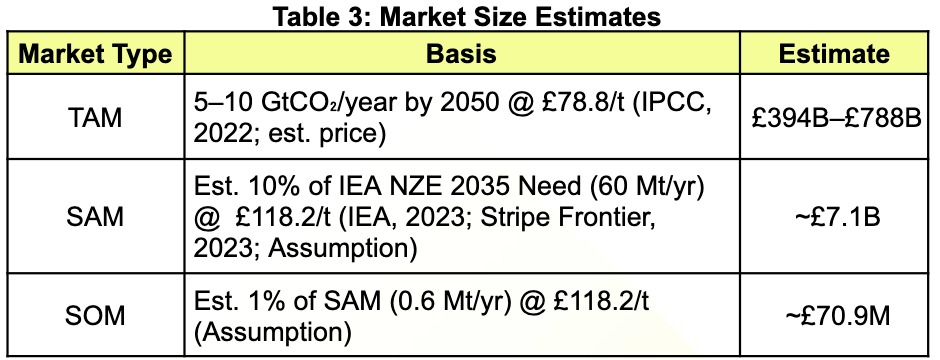
Sizing the market from IPCC and IEA targets, priced at Stripe Frontier's £118 a tonne.
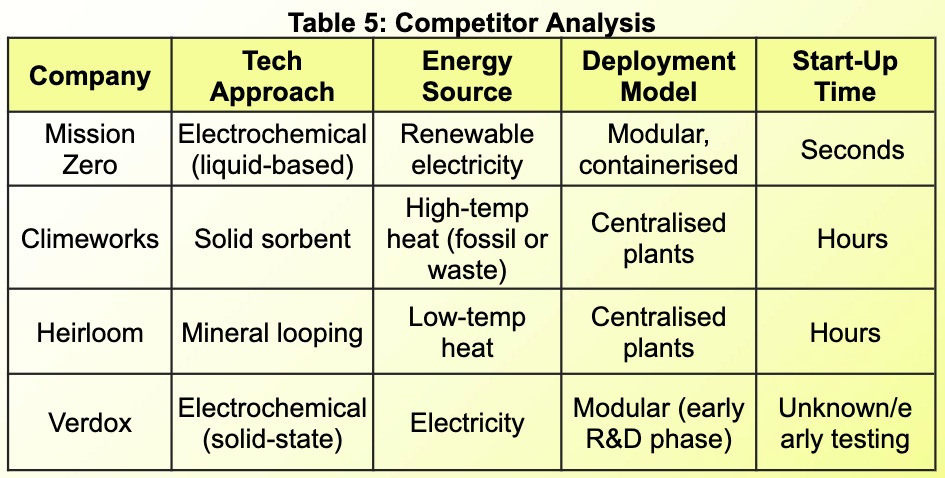
Comparing MZT with three rivals. Start-up time is where it stands out: seconds, not hours.
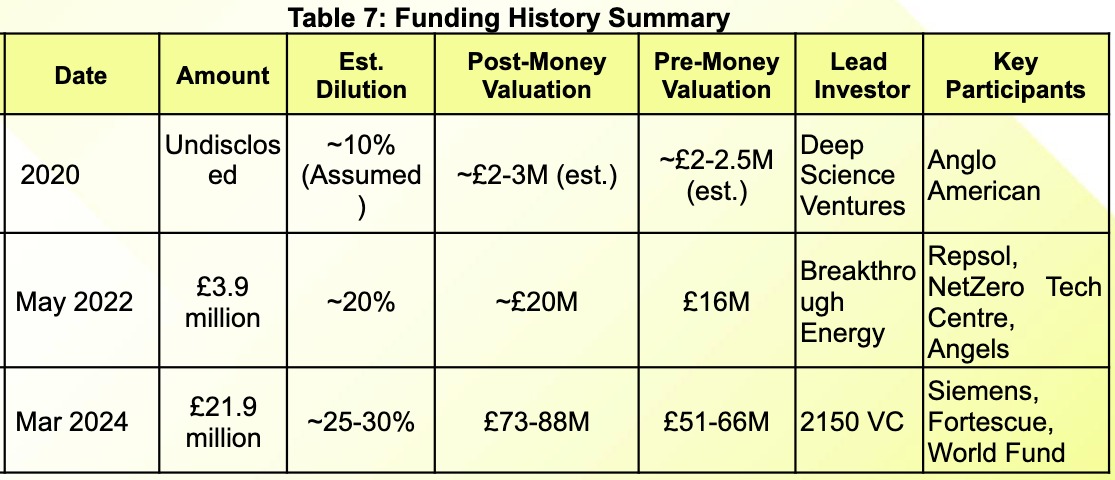
Rebuilding three rounds of funding to see what the company was worth going into Series B.
Outcomes
- Series B recommended
- £10m
- Pre-money valuation (25% dilution)
- £30m
- Post-money at a 30% IRR
- £80.9m
Initial findings
The technology was the strong part of the case. The commercial team was the gap.
- Product. MZT's system starts in seconds; thermal rivals need 80–900°C and hours to start. Five patents are filed on the process, cell design and controls.
- Design. In Ghosh's words, they built it "like a Nintendo Gameboy — simple, robust, and adaptable."
- Team. All three founders are technical. The planned hires (a chief revenue officer, three project managers and a business development lead for CO₂ use) fill a real gap in sales and delivery.
- Markets. Ghosh named Japan, Canada and Scandinavia as priorities: renewable capacity, removal mandates, and public money for pilots.
Results
The deal terms sit within normal ranges for a climate-hardware Series B.
GoalsFor an investor
ResultsFrom the report
Is the technology defensible?
SecondsFive filed patents and a start-up time rivals can't match
What was it worth after Series A?
£73–88mPost-money range implied by 25–30% dilution on £21.9m
What should the round look like?
£10mWithin the typical £8–25m Series B range, at 25% dilution
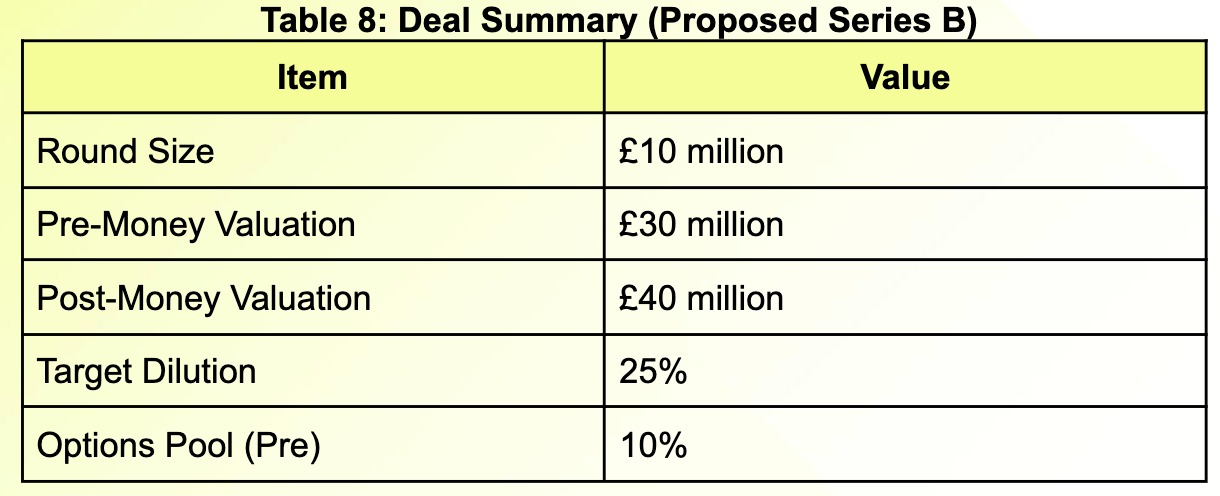
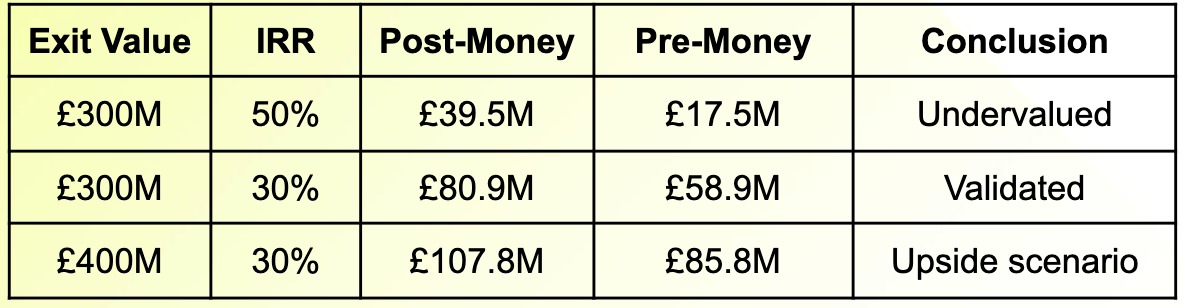
At a £300m exit, dropping the target return from 50% to 30% moves the post-money from £39.5m to £80.9m. A £400m exit at 30% gives £107.8m.
Reflection
What I learned
The best source can be one message away.
A cold LinkedIn message got me an interview with the COO. It shaped the strategy and market sections more than any database did.
A valuation is an argument about the discount rate.
Moving the target IRR from 50% to 30% more than doubles the post-money, from £39.5m to £80.9m. I learned to show that sensitivity rather than hide it.
What I would do differently.
I would reconcile the proposed round with the Series A more explicitly. A £40m post-money sits below the £73–88m Series A range, so the case needs to say why an investor, and the existing shareholders, would accept that.